When you call for a tow, you're usually thinking about one thing: getting your car moved. But how it's moved matters, especially for newer cars, all-wheel-drive SUVs, electric vehicles and anything lowered or valuable. Here is the difference between the two most common types of towing, in plain words.
How wheel-lift towing works
A wheel-lift truck slides a metal cradle under the front or back wheels, lifts that end of the car off the ground, and tows it with the other two wheels rolling on the road. It's quick to hook up and works well in tight spots.
For many front-wheel-drive and rear-wheel-drive cars over short distances, a wheel-lift tow is a normal, accepted way to move a car, as long as the drive wheels are the ones lifted (or dollies are used).
How flatbed towing works
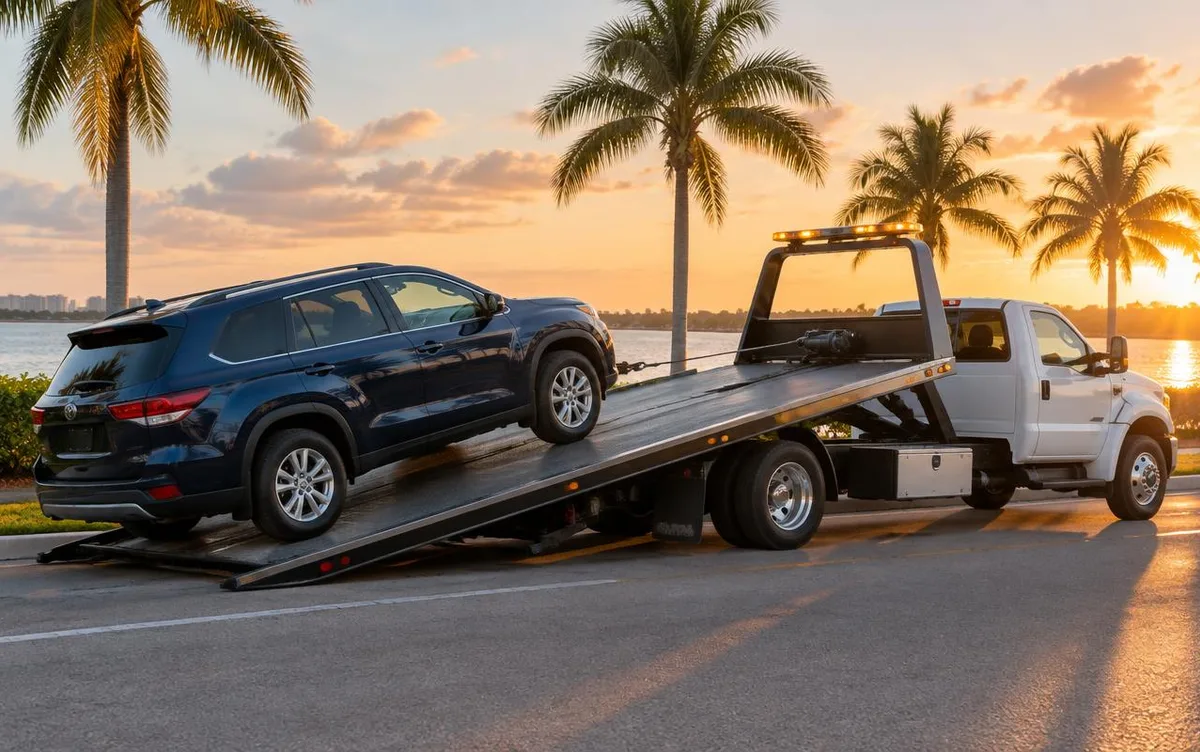
A flatbed (also called a rollback) tilts its whole bed down to the ground. The car is pulled up onto the bed with a winch, then strapped down at the wheels, and the bed levels out again. All four wheels ride on the truck. Nothing touches the road.
That's why a flatbed is the safest choice for most cars: no wear on the tires, transmission or suspension, and the car is held still the whole way.
Cars that usually need a flatbed
- All-wheel-drive and four-wheel-drive vehicles. With all four wheels connected to the drivetrain, rolling any of them on the road can strain the transmission or transfer case. Many owner's manuals say to tow these with all four wheels off the ground.
- Electric vehicles and many hybrids. The wheels are connected to the motor, and many manufacturers say to transport them on a flatbed only.
- Lowered cars and low riders. A wheel-lift can scrape a front lip or bumper. A flatbed with a gentle loading angle avoids that.
- Exotic, luxury and classic cars. Expensive bodywork, low ground clearance, and parts that are hard to replace. A flatbed keeps everything off the road.
- Cars with damaged wheels or suspension after an accident. If a wheel won't turn or the car pulls hard, it shouldn't roll at all.
- Motorcycles. A bike rides upright on a flatbed, properly strapped.
- Longer trips. The farther the trip, the more a flatbed makes sense.
When a wheel-lift can make sense
Wheel-lifts have their place: very low parking garages where a flatbed can't fit, pulling a car out of a tight spot before loading it, or a short move of a simple two-wheel-drive car. A good tow operator will tell you honestly which one your car needs and why.
How to check your own car
Look in your owner's manual for a section called "Towing" or "Towing your vehicle." It usually says whether the car can be towed with two wheels down, which end to lift, and whether a flatbed is required. If you can't find it, tell the tow company your year, make, model and whether it's AWD or electric, and they can help.
What to ask any tow company when you call
- Will my car go on a flatbed?
- My car is lowered (or AWD, or electric). How will you load it?
- Where will you attach the straps?
- Can I see photos of the car once it's loaded and when it's dropped off?
- Where can I ride, or should I get there on my own?
A good company answers those questions clearly. At Deanna's Towing we tow on a flatbed, and we're happy to walk you through how your car will be loaded.